New construction of external drinking water supply networks: Serpneva, Pershotravneva, Shevchenko, Podilska, Kamianets-Podilska, Gagarina, Molodizhna streets, Kosohirka village, Khmelnytskyi district, Khmelnytskyi region
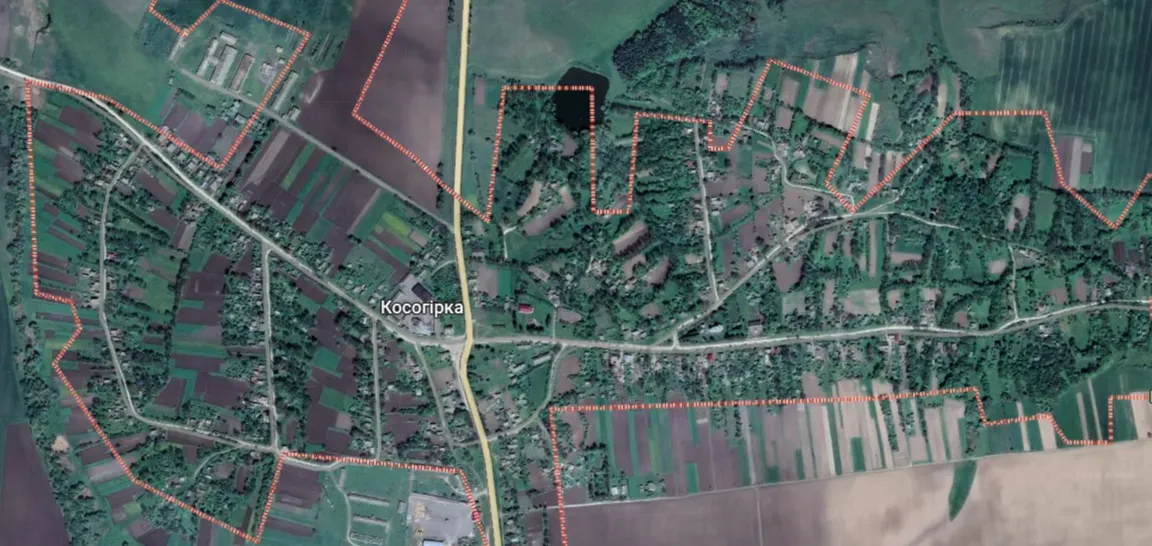
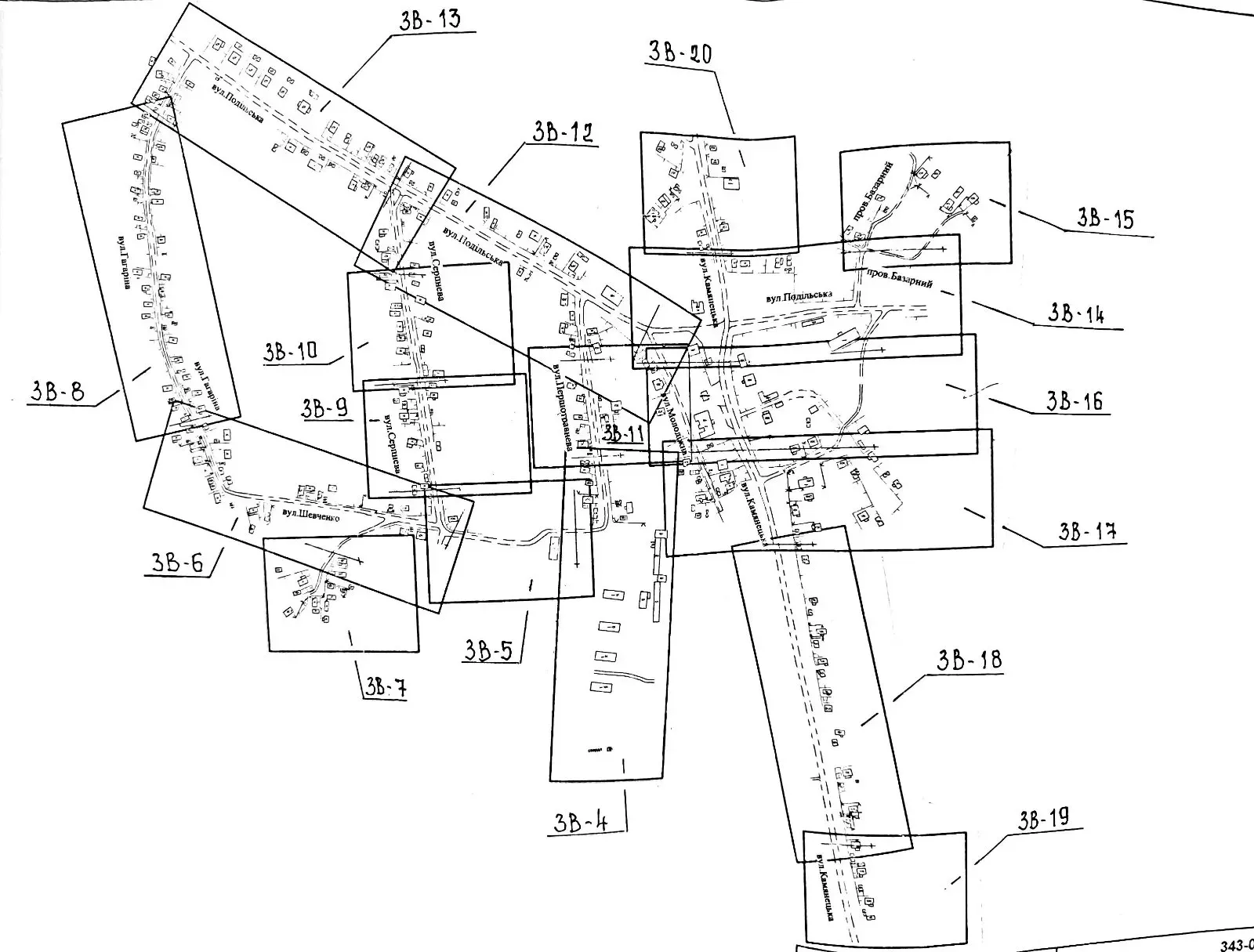
New construction of external drinking water supply networks: Serpneva, Pershotravneva, Shevchenko, Podilska, Kamianets-Podilska, Gagarina, Molodizhna streets, Kosohirka village, Khmelnytskyi district, Khmelnytskyi region
Total project budget
2 033 485 UAH
Project goal: The project's goal is to ensure sanitary, hygienic, ecological and safe living conditions for 273 residents of the village of Kosohirka due to high-quality and uninterrupted access to drinking water.
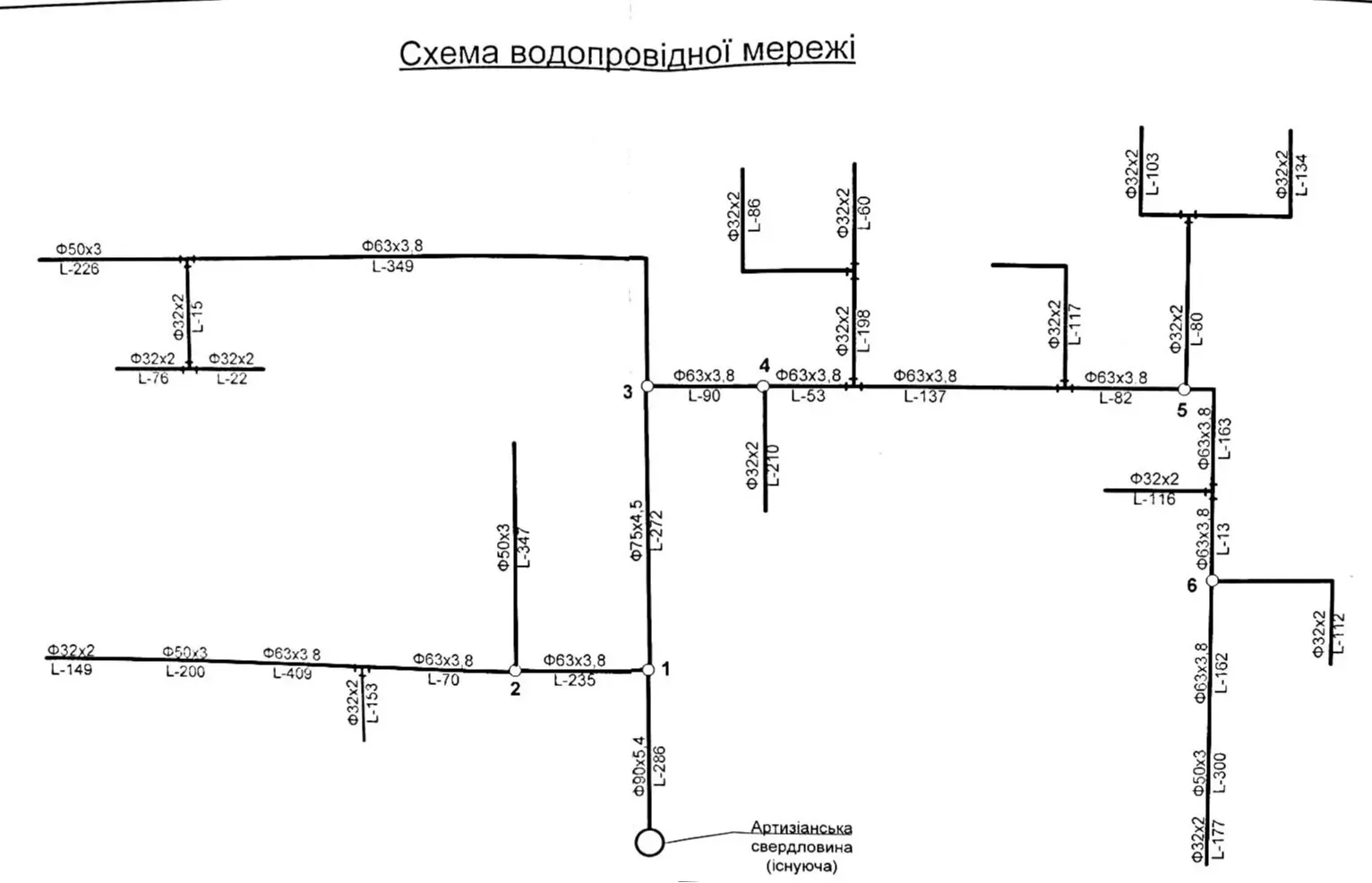
The project involves the construction of a new drinking water pipeline with a length of 5.202 km. Water supply is provided from an existing artesian well with the replacement of pumping equipment.
Main technical and economic indicators: pressure at the connection point 2.5 atm, water consumption volume - 40.95 cubic meters/day.
Main technical solutions
Water supply to subscribers is carried out from an existing artesian well.
Water consumption according to DBN V.2.5-74-2013 is 150 l/day.
The well flow rate is 5.0 cubic meters/hour.
The total water consumption and hydraulic calculation of the pipelines take into account existing consumers and the prospective connection of other streets.
Water distribution along the streets is provided according to a dead-end scheme. Pipelines for the installation of the water supply network are polyethylene for drinking water made of polyethylene PE-100 SDR-17 (1.0 MPa) in accordance with DSTU B V.2.7-151:2008.
The connection of the pipelines is provided by thermistor welding.
All pipelines after welding must be tested with a hydraulic pressure of 1.25 Rrob.
The depth of the pipelines is 1.5 m from the top of the pipe to the surface of the pipe.
The horizontal distance to existing gas pipelines is 1.0 m, to existing water pipes - 1.0 m, to existing cables and electrical supports - 1.0 m; vertically - 0.25 m.
Water consumption for external fire extinguishing according to DBN V.2.5-74-2013 is 5 l/sec, the number of simultaneous fires is 1.
Construction is planned in one turn without allocation of starting complexes.
External water supply networks
Construction of a prefabricated water supply network is planned to be carried out from PE pipes SDR 17 with a diameter of 32-90 mm.
Water supply wells - prefabricated from reinforced concrete elements. In water supply wells, the project provides for the installation of shut-off valves to disconnect sections of the external water supply in the event of an emergency or preventive situation.
Sanitary protection of the water supply is provided for by a sanitary protective strip, the width of which is not less than 10.0 m.
During the construction of water supply networks, the following technological operations are performed:
- breakdown and planning of the route;
- earthworks (digging trenches, leveling the bottom, backfilling 10 cm with sandy or other non-heaving soil that does not contain inclusions larger than 2.0 cm);
- delivery and rolling of pipes;
- welding of pipes on the edge of the trench or in the trench;
- laying the pipeline in the trench.
Engineering protection of the territory
Construction of street water supply networks in the village of Kosohirka, subject to compliance with the requirements of the project documentation, will not cause a negative impact on economic activity.
Cutting down trees and plantings - not provided.
Restricting the territory for the placement of structures will not cause a negative impact on the residents of the village.
After laying the water supply network with backfilling of the trench, the natural landscape will be restored to its original appearance.
When the customer and contractor implement all technical solutions provided for by the project, environmentally safe operation of the water supply network is ensured.
The operation of the water supply network is carried out through an operating well with a pump that operates in the aquatic environment without releasing toxic substances and releasing them into the atmosphere. The operation of the water supply network does not involve atmospheric air pollution.
After the construction of the water supply network, land reclamation and restoration of the territory to its original state are carried out.